Monday, March 30, 2020

NRB facilitates liquidity injection and unveils relief package

Nepal Rastra Bank has announced a series of measures to alleviate the impact of COVID-19 on businesses and banking sector. Here are the major highlights:
  • Loan installment payments postponed till mid-July 2020. Banks cannot impose penal interest or downgrade any loans for delays in repayment. If borrower pays by mid-April, then banks need to provide 10% exemption on interest. 
  • BFIs can extend repayment deadline of short-term working capital by 60 days. Application from tourism and transport sectors for short-term working capital needs to be processed within five days. They should not be charged feed exceeding 0.25% of the loan amount.
  • Prioritization of refinancing facilities for MSMEs.
  • Potential migrants who cannot go overseas for work and want to start own business, then loans extended to them by BFIs can be counted as deprived sector loan. 
  • CRR has been reduced by 100 bps to 3%. NRB says this will add NRS35 billion liquidity into the banking sector.

Nepal government announces economic package to address the impact of COVID-19

A Cabinet meeting on 29 March 2020 took a number of decisions to alleviate the impact of COVID-19 on households. These pertain to social protection, subsidy, employment, and compliance relief. There still is not much in terms of relief to MSMEs hit by COVID-19 pandemic. 

Here are the major highlights:

Food subsidy and quarantine
  • Local governments are responsible for supplying food to the needy and quarantine. For this they will have to prepare data on unorganized sector workers and establish fund to provide relief for them during the lockdown period. 
  • In case of insufficient funds, they can request budget from the central government. Households have to register their names at respective ward offices to get relief.
Employment protection
  • Employers are ordered to pay salaries of employees during the lockdown period. They can use welfare funds to make payments until the resumption of business. 
  • Nepal government will deposit SSF contribution by both workers and employers for the month of Chaitra (mid-March to mid-April).
  • Migrant workers who returned back but could not go again may register at employment service center at local level to avail employment opportunities through PM employment program.
Other measures
  • Exemption of one month of house rent if landlords exempt one month’s rent for workers in unorganized sectors. 
  • 10 percent discount on food items at government operated food companies
  • 25 percent discount in internet and electricity up to 150 units. Deadline for utility bill payment extended till May 13. Similarly, tax payment deadline has been extended till May 7. Vehicle registration and driver’s license renewal deadline extended till May 13.
  • NRs 2.5 million free insurance for medical personnel
  • Private schools must exempt all fees up to secondary level except boarding for a month
  • No customs duty for any government, private and community sector importing medical equipment
  • Import limit to prevent rapid depletion of forex: 10kg gold import limit; bank on vehicles worth over US$50,000; bank on import of betel nut, black pepper, peas among other
  • Procurement agreements and bank guarantee time extended by a month
Budget management
  • Government will use existing funds from the budget and those collected by the three tiers of government under various relief funds.
  • Government will accept NRs 3.48 billion concessional loan from the WB, NRs13.9 billion no-interest loan from the IMF, and US$50 million aid package from the ADB
The biggest challenge is on implementation right now. A majority of these packages are open-ended and lack ascertained budget. 
  • Given the lockdown, how are affected people going to go to local governments to register to get relief. Also, how ready are local governments on this regard? Who is going to identify a particular households as needy/poor?
  • Nepal’s public distribution system is in a shamble. The idea of selling lower priced goods from its stores is not going to much effective. Also, what about mobility restriction to reach the stores?
  • Tax exemption on rent is not a good enough incentive to encourage landlords to exempt rent of tenants. Tax on rent is far less than the rent amount.
  • The PM employment fund is not that effective. It remains to be seen how many workers will actually register for employment under the scheme.  
  • Many companies do not have their own welfare funds as they are required by law to make deposits in SSF.

Friday, March 27, 2020

RBI facilitates liquidity injection and relaxes regulations to boost Indian economy

A day after the Indian government announced about $23 billion of economic package (about 0.9% of GDP) consisting of cash transfers, food subsidy and employment protection, the Reserve Bank of India (RBI) has now added more to the stimulus package. The RBI has reduced policy repo rate and have maintained an accommodative monetary policy without jeopardizing inflation target. These monetary measures are expected to improve liquidity, reduce cost of funds and help businesses. According to the RBI, these measures will help inject an addition 1.8% of GDP equivalent of liquidity (combined with previous 1.4% of GDP from previous measures, the cumulative comes out to be 3.2% of GDP).

Here are the highlights of MPC’s decisions published today:

Policy rates

Policy repo rate, which is the rate of interest charged by RBI on the repurchase of securities, reduced by 75 basis points to 4.4%. It is a mechanism to increase liquidity in the market as commercial banks can now borrow money by selling their security to RBI at a lower rate.

Reverse repo rate, which sets the floor of the liquidity adjustment facility (LAF) corridor, was reduced by 90 basis points to 4%. Reverse report rate is the rate at which RBI borrows money from commercial banks. It is a mechanism to absorb liquidity from the market and lowering reverse repo rate means not limiting liquidity from the market. Banks find it relatively unattractive to park money at RBI if reverse repo rate is lower.

Liquidity facilities

Targeted long-term repo operations: Reserve Bank will conduct auctions of targeted term repos of up to three years tenor of appropriate sizes for a total amount of up to ₹ 1,00,000 crore at a floating rate, linked to the policy repo rate. Exposures under this facility will also not be reckoned under the large exposure framework.

Cash reserve ratio: CRR of all banks has been reduced by 100 basis points to 3% of net demand and time liabilities (NDTL) with effect from the reporting fortnight beginning March 28, 2020 for a period of one year. The requirement of minimum daily CRR balance maintenance has been reduced from 90% to 80%. Available up to 26 June 2020.

Marginal Standing Facility: Increased the accommodation under the marginal standing facility (MSF) from 2% of the statutory liquidity ratio (SLR) to 3% with immediate effect. Applicable till 30 June 2020.

Monetary policy rate corridor: Widened the existing policy rate corridor from 50 bps to 65 bps. Now, the reverse repo rate under the liquidity adjustment facility (LAF) would be 40 bps lower than the policy repo rate, as against existing 25 bps. The marginal standing facility (MSF) rate would continue to be 25 bps above the policy repo rate.

Regulation and supervision

RBI has eased regulation and supervision concerning moratorium on term loans; deferring interest payments on working capital; easing of working capital financing; deferment of implementation of the net stable funding ratio; and the last tranche of the capital conservation buffer.

Moratorium on term loans: The moratorium on term loans and the deferring of interest payments on working capital will not result in asset classification downgrade.

All commercial banks (including regional rural banks, small finance banks and local area banks), co-operative banks, all-India Financial Institutions, and NBFCs (including housing finance companies and micro-finance institutions) (“lending institutions”) are being permitted to allow a moratorium of three months on payment of instalments in respect of all term loans outstanding as on March 1, 2020. 

Interest deferment: Lending institutions are being permitted to allow a deferment of three months on payment of interest in respect of all such facilities outstanding as on March 1, 2020. The accumulated interest for the period will be paid after the expiry of the deferment period.

Easing of working capital: Lending institutions are allowed to recalculate drawing power by reducing margins and/or by reassessing the working capital cycle for the borrowers. Such changes will not result in asset classification downgrade

Compliance deferment: Implementation of net sable funding ratio and last tranche of capital conservation buffer are extended by around six months. NSFR reduces funding risk by requiring banks to fund their activities with sufficiently stable sources of funding over a time horizon of a year in order to mitigate the risk of future funding stress. CCB is designed to ensure that banks build up capital buffers during normal times (i.e., outside periods of stress) which can be drawn down as losses are incurred during a stressed period.

Earlier, RBI had also reduced policy repo rate in response to the slowdown in the economy; rolled out USD buy/sell swap auction; purchased in the open market, launched Operation Twist to ensure better monetary policy transmission through open market operation of government securities; engaged in LTROs; and exempted incremental retail loans for MSMEs, residential housing and automobiles from the maintenance of CRR, among others. These were all geared toward maintaining liquidity in the market. 

The central bank maintains that the outlook is now heavily contingent upon the intensity, spread and duration of the pandemic. The second advance GDP growth estimate of 5% now looks unfeasible. The intensity, spread and duration of the COVID-19 pandemic will dictate FY2021 outlook (besides the resilience of agriculture and allied activities). However, slump in international crude prices will provide some relief in the external sector. 

The EIU has already downgraded India's GDP growth forecast for FY2021 to 2.1% (from 6%). 

The weakening aggregate demand and robust agricultural output (notwithstanding the onion price shock) would mean lower inflationary pressures in the economy. 


Thursday, March 26, 2020

INR 1.75 trillion economic package in India to address the impact of COVID-19

Indian finance minister Niramla Sitharaman announced an economic package of INR 1.75 trillion (about US$23 billion at 1 USD = INR 75.4 exchange rate) today to address the impact of COVID-19 on the economy. It is mostly augmentation of existing social protection measures. It is tagged as ‘Pradhan Mantri Garib Kalyan Package’. The package amounts to 0.9% of GDP (FY2020RE) and includes:
  • Insurance scheme for healthcare workers fighting COVID-19 in government hospitals and healthcare centers
  • EPF payment of employees who earn less than INR 15,000 per month and work in companies with less than 100 employees
  • Cash transfers:
    • Each farmer gets INR 2000 in April 2020 as an advance installment from PM-KISAN scheme (total INR 16,000 crores or US$2.13 billion). [Each farmer owning a land gets INR 6,000 per year under the scheme] 
    • INR 31,000 crore (US$ 4.12 billion) under PMJDY women account-holders (INR 500 per month for the next three months)
    • INR 13,000 crore (US$ 1.73 billion) worth of cooking gas cylinders to 80 million households for the next three months (one each month)
    • INR 5,000 crore (US$ 0.66 billion) to prevent job losses in organized sector (govt to pay 24% of monthly wages into their PF accounts for the next three months)
    • INR 3,000 crore (US$ 0.4 billion) for senior citizens (INR 1000 per month for the next three months to about 30 million aged widows and people in Dviyang category)
  • Food subsidy:
    • INR 40,000 crore (US$ 5.31 billion) to double entitlements of food grains (5 kg rice extra) for the next three months to 800 million people
    • INR 5,000 crore (US$ 0.66 billion) to provide one-kilogram pulses per family for the next three months
  • Employment protection: INR 5,600 crore (US$ 0.74 billion) to cover increase in MNREGA wages (by INR 20 with effect from 01 April 2020) to benefit 136 million households. Wages per day will now become INR 202.
  • Other measures
    • Allow non-recoverable advance of 75% of amount or three months of wages from EPF accounts. 40 million registered families to benefit from this
    • Collateral free loans of INR 2 million (up from INR 1 million) to women organized 6.3 million self-help groups 
These measures are on top of the previously announced measures to help the business sector (mostly compliance relief) and state-specific measures.

Sunday, March 22, 2020

How does COVID-19 affect the economy?

The economic impact of COVID-19 is still an evolving topic. One thing for sure is that it will be a combination of supply and demand shocks and followed by a financial shock. A complex vortex of these three shocks will complicate policy response. Unconventional monetary as well as fiscal policies are required for quite some time. The most effective fiscal response for the immediate-term are those geared to boost consumer demand such as direct cash transfers to those losing jobs or facing reduced working hours. Similarly, any facility to improve cash flow or to cushion against rising debt of MSMEs is going to be a huge relief to businesses. This could be done through interest and principal moratorium, cheaper and easier line of credit, rapid on-lending facilities, government buy back of production for the interim period, tax incentives, etc. It will essentially be a combination of fiscal and monetary policies. 

Here some articles related to the underlying emerging economic dynamics and how to resolve it. 

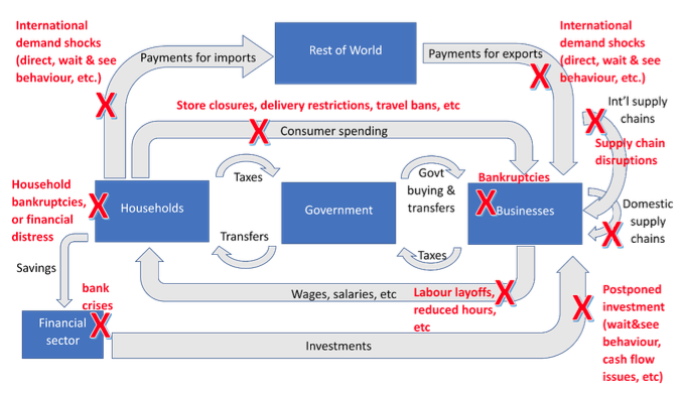
1. Baldwin presents widespread disruption depicted through a circular flow of income diagram.

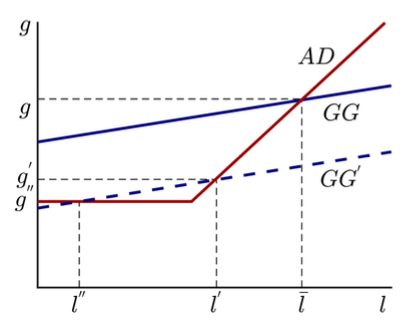
2. Fornaro and Wolf present a simple framework that shows how a demand-driven slump gives rise to a supply-demand doom loop, opening doors to stagnation traps induced by pessimistic animal spirits. The COVID-19 pandemic induces expectation-driven stagnation traps.


It follows a standard New Keynesian model where aggregate demand determines output and employment. So, aggregate demand depends positively on productivity growth as faster productivity growth boosts agent's expectation of future growth and induce them to spend more now. If the COVID-19 pandemic reduces productivity growth, then aggregate demand falls, resulting in involuntary unemployment and a demand-driven recession. However, since investment depends on aggregate demand (which remains suppressed in the face of slower productivity growth), firms will have less incentives to invest. This creates demand supply doom loop. Furthermore, if there is zero lower bound constraint on monetary policy, then an economy faces a kinked aggregate demand curve. A reduction in productivity growth (GG curve shifts downward) means lower productivity growth (g) and employment (l). Eventually, pessimistic animal spirits push the economy into a stagnation trap (lower equilibrium). Against this backdrop, conventional monetary policy is ineffective. Fiscal policy that is geared to boost aggregate demand (which incentives investment and leads to higher productivity) is helpful.


Jordi Gali argues that the time has come for helicopter money- direct, unrepayable funding by the central bank of additional fiscal transfers deemed necessary. It puts less burden on fiscal policy (if taxes are raised or government debt is increased).

The pandemic is reducing consumption of goods and services, which will hit GDP growth. It is also leading to a significant reduction in employment (which then lowers income and consumption). Firms may try to keep payroll unchanged but keep meeting other fixed costs (rent, interest, etc) by taking loans. But, banks may not lend more due to the probability of default and deterioration of balance sheets. This requires a swift and well targeted policy response. 

Government could cover payroll and other unavoidable expenses of affected firms. Ideally, this must be non-repayable transfer. But, this means government will have to raise taxes or to borrow from capital markets and increase debt burden. Gali argues that quantitative easing, a massive purchase of newly issued debt by central bank, could be helpful but this increases government debt too, putting public finances in unsustainable path. He proposes ‘helicopter money'- unrepayable funding by the central bank of the additional fiscal transfers deemed necessary. The central bank simply credits the government's account and it adjusts accounts by showing a reduction in its capital or insert a permanent annotation on the asset side of the balance sheet. This should be used only during emergencies. 

Friday, March 13, 2020

Economic crisis ensuing medical shock and flow of income

Richard Baldwin has a nice post on VoxEU on the effect of COVID-19 medical shock on economic crisis. He argues that this economic crisis is different because it has hit all the G7 economies and China at the same time and from multiple fronts. Here is his depiction of the famous circular flow of income diagram and how the medical shock is disrupting flow of goods & services and money. 
   
There is a combination of a supply and a demand shock. It is leading to expectations dampening and hysteresis. Bond prices and stock prices are moving in the same direction (not usual) and normally liquid assets are freezing up. Even gold futures have been falling. Risk averse behavior of households and business across investment and saving assets. Gripping uncertainty. 

Thursday, March 12, 2020

कोरोना भाइरसपीडित अर्थतन्त्र

यो विचार फाल्गुण २७, २०७६  गते नयाँ पत्रिका दैनिकमा प्रकाशीत भएको थियो.  English version is here


कोरोनाका कारण देखा परेको विश्वव्यापी आर्थिक मन्दीले हाम्रो कमजोर निर्यात क्षेत्रलाई झन् ठूलो धक्का पु-याउनेछ

कोरोना भाइरस प्रकोप (कोभिड-१९) ले क्षेत्रीय र विश्व अर्थ व्यवस्थामा गम्भीर असर पारिराखेको छ । भाइरसको महामारी कहिले रोकिने हो, ठेगान छैन । धेरै देशसँग त यसलाई जाँच्ने उपकरणसमेत अभाव छ । अहिले यस रोगको खोप पत्ता लगाउन वैज्ञानिक लागिपरेका छन् । छोटो समयमै विश्वव्यापी रूपमा फैलिएको यो भाइरसले दशकौँदेखि स्थापित आपूर्ति शृंखलामा अवरोध ल्याएको छ । 

यसले गर्दा विश्व अर्थतन्त्रमा मन्दी आउन सक्ने प्रारम्भिक पूर्वानुमान गरिएको छ । चिनियाँ सामान र पर्यटकको ठूलो महत्व रहेको हाम्रो अर्थतन्त्रमा सोझै नकारात्मक असर पर्ने देखिन्छ । चीनको हुबेई प्रान्तको राजधानी वुहानमा डिसेम्बर २०१९ मा भाइरस पहिचान भएको थियो । यसले चिनियाँ उत्पादन, आपूर्ति संयन्त्र र अर्थ व्यवस्थामाथि त गम्भीर चोट पु-याइसक्यो नै, भाइरसको विश्वव्यापी फैलावटबाट पैदा हुने अनिश्चितता र वैकल्पिक आपूर्ति शृंखलामा अचानक आघात आएपछि विश्वकै अर्थतन्त्र अहिले जोखिममा छ । विश्वव्यापी कारोबार हुने मध्यवर्ती उत्पादनको २० प्रतिशत चीनमा उत्पादन हुन्छ । सन् २००२ मा यो केबल चार प्रतिशत थियो । 

विश्वव्यापी आपूर्ति शृंखलामा कोरोना भाइरस महामारीको प्रभावबारे ‘युएनसिटिएडी’द्वारा गरिएको प्रारम्भिक विश्लेषणअनुसार सबैभन्दा बढी प्रभावित उत्पादनमा सटीक उपकरण, मेसिनरी, मोटरबाहन, सञ्चार उपकरण, विद्युतीय मेसिनरी, रबर र प्लास्टिक, छालाका सामान, धातु, कागज, पेट्रोरसायन र कपडालगायत पर्छन् । युरोपियन युनियन, अमेरिका, जापान, कोरिया र भियतनाम यसबाट सबैभन्दा बढी प्रभावित हुने अर्थतन्त्र हुन् । कच्चा माल र मध्यवर्ती सामान उत्पादनका लागि चीनमा निर्भर अन्य देश पनि प्रभावित छन् ।

यसबाहेक, कोरोना भाइरसको फैलावटका कारण श्रम, पुँजी र व्यापारमा अवरोध आउँदा धेरै देशमा उत्पादन क्षमता कम हुनेछ । ‘यसैगरी, प्रकोप विकसितहुने ट्रेन्डका आधारमा एशियाई विकास बैंकले विश्वव्यापी प्रभाव ७७ अर्ब डलर देखि ३४६ अर्ब डलरको बीचमा हुन सक्ने प्रारम्भिक आनुमन गरेको छ।  र्ती सामानको निर्यातमा दुई प्रतिशतको कटौतीले विश्वव्यापी पचास अरब डलरको उत्पादनमा गिरावट निम्त्याउँछ।

चार मुख्य प्रभाव

महामारीले सन् २००८ को विश्वव्यापी वित्तीय संकट र २०१० मा खाद्यान्नको मुद्रास्र्फीतिको भन्दा बढी नकारात्मक प्रभाव नेपाली अर्थतन्त्रमा पार्ने देखिन्छ । नेपाली अर्थव्यवस्था चार प्रमुख मोर्चामा प्रभावित हुने देखिन्छ । यसले आर्थिक वृद्धि र रोजगारीको अवसरलाई असर गर्नेछ । पहिलो, यात्रा र पर्यटन उद्योग, जुन २०२० मा अपेक्षित वृद्धिका लागि तयारीहुँदै थियो । 

यात्रा प्रतिबन्धले सन् २०२० मा नेपालमा  बीस लाख पर्यटक आगमनको आशा अब सपना मात्रै हुनेछ । पर्यटन पूर्वाधार र सेवाका आधारमा बीस लाख पर्यटक लक्ष्य सुरुमै अवास्तविक लक्ष्य थियो । बीस लाख पर्यटक आउने आशामा नयाँ स्थापना गरिएका, निर्माणाधीन र सञ्चालनमा रहेका होटेल र रेस्टुरेन्टका लगानीकर्तालाई ऋण नवीकरण गर्नुपर्ने समस्याले पिरोल्न थालिसकेको छ । 

चीनबाट सबै उडान निलम्बित छन् नै, अन्य देशबाट आउने पर्यटकमा पनि भारी गिरावट आएको छ । गत साल आएका बाह्र लाख पर्यटकमध्ये चौँध प्रतिशत चीनबाट आएका थिए । चिनियाँ पर्यटककै कारण मुलुकको पर्यटन क्षेत्रमा ‘अफ सिजन’ महिना नै घटेको थियो । वर्षभरि कारोबार चलायमान पारी आर्थिक गतिविधि र रोजगारी वृद्धि गर्न अहम भूमिका खेलेको थियो । भाइरसबाट संक्रमित हुने डरले अहिले पर्यटक आगमन ठप्पजस्तै छ । होटेलको औसत ‘अकुपेन्सी’ पैतालीस प्रतिशतभन्दा तल झरेको छ । 

अघिल्ला वर्षमा यो समयमा पचासी प्रतिशतभन्दा धेरै ‘अकुपेन्सी’ हुने गथ्र्यो । मुलुकमा आउने पाहुनामध्ये सत्तरी प्रतिशत छुट्टी र मनोरन्जनका लागि आउ“छन् भने आठ प्रतिशत पदयात्रा र पर्वतारोहण तथा पन्ध्र प्रतिशत तीर्थयात्रा गर्न आउँछन् । यात्रा र पर्यटन उद्योगमा गम्भीर प्रभावका कारण अन्ततः यस वर्ष सेवा क्षेत्रको वृद्धि अनुमान गरेभन्दा धेरै कम हुनेछ । यात्रा र पर्यटन क्षेत्रको प्रत्यक्ष योगदान (होटेल, ट्राभल एजेन्ट, एयरलाइन्स र यात्री यातायात सेवाद्वारा उत्पन्न आर्थिक गतिविधि) को अनुमानित कुल गार्हस्थ उत्पादनको चार प्रतिशतजति छ । यस क्षेत्रले पनि कुल वैदेशिक मुद्रा आयमा ६ प्रतिशत जति योगदान गर्दै आएको छ ।

दोस्रो, आयोजना कार्यान्वयन र समापनमा अवरोध आउनेछ । विशेषगरी, विमानस्थल, जलविद्युत्, सडक यातायातलगायत क्षेत्रका ठूला पूर्वाधार परियोजना समय र लागत वृद्धिका समस्याले पिरोलिनेछन् । केही चिनियाँ कामदार र प्रबन्धकलाई रोजगारी दिइरहेका चिनियाँ ठेकेदारले बनाइरहेका आयोजनामा समस्या देखिसकेको छ । जस्तैः नारायणघाट–बुटवल सडक सुधार परियोजना, रसुवागढी–स्याफ्रुबेँसी सडक परियोजना र काठमाडौं बाहिरी चक्रपथको विस्तृत परियोजना समीक्षालगायत कार्य प्रभावित भइसकेको सूचीमा पर्छन् । 

बिस्तारै अन्य आयोजनाले पनि कच्चा माल र मेसिनरी आभावका कारण समयमै सम्पन्न गर्न नसक्ने सकस व्यहोर्नेछन् । यसले सार्वजनिक पुँजीगत खर्चमा सोझै असर पार्नेछ । परिणामस्वरूप सिमेन्ट र डन्डी उद्योग उत्पादन कटौती गर्न बाध्य हुनेछन् । सरकारले पुँजीगत खर्च बाचा गरेझै बढाउने आशामा धेरै उद्योगले स्थापित क्षमतामा वृद्धि गरेका छन् । पुँजीगत खर्च सोचेभन्दा कम भयो भने ती उद्योग झन् समस्यामा पर्नेछन् । उदाहरणका लागि सिमेन्ट उद्योगको क्षमता उपयोग चालीस प्रतिशतमा झरेको छ । औद्योगिक र पर्यटन क्षेत्रमा उत्पादन र व्यापार कम भई बैंकको ऋण तिर्न नसक्ने अवस्थामा पुग्ने सम्भावना बढेको छ ।

तेस्रो, विश्वव्यापी आपूर्ति शृंखलामा चीनको केन्द्रीय भूमिका रहेको हुँदा प्रकोपले कच्चा माल र मध्यवर्ती सामानको आपूर्तिमा बाधा पु-याउँछ । नेपालका उद्योग तथा सेवा क्षेत्रले उत्पादन गर्ने मालसामानमा कच्चा माल, मध्यवर्ती वा तयारी सामानमा चीन निर्भरता धेरै छ । मुलुकको कुल व्यापारमा चीनबाट आउने सामानको पन्ध्र प्रतिशत हिस्सा छ । अरू देशमा चिनियाँ कच्चा माल र मध्यवर्ती सामान प्रयोग गरेर बनाइएका सामान पनि नेपाली उद्योगले प्रयोग गर्छन् । चीन निर्यात हुने शीर्ष वस्तुमा हस्तशिल्प, ऊनी कार्पेट, चाउचाउ र तयारी पोसाक पर्छन् । यस्तै, दूरसञ्चार उपकरण, तयारी पोसाक, विद्युतीय सामान, मेसिनरी पार्ट्स र रसायनिक मल चीनबाट आयात हुने शीर्ष वस्तु हुन् । विश्वव्यापी आर्थिक मन्दीले चीनबाहेक हाम्रा वस्तु र सेवाको मागलाई पनि कमजोर बनाउने पक्का छ । यसले हाम्रो कमजोर निर्यात क्षेत्रलाई झन् ठूलो धक्का पुग्नेछ ।

चौथो, ‘माइग्रेसन’ र रेमिट्यान्स प्रवाह प्रभावित हुनेछन् । सरकारले दक्षिण कोरियाजस्तो आकर्षक गन्तव्यमा बहिर्गमन निलम्बित गरिसकेको छ । त्यस्तै, खाडी देशमा वैदेशिक रोजगारीमा कडाइ गरेको छ । यी देशमा आपूर्ति र आर्थिक अवरोधका साथै विश्व आर्थिक मन्दीले लगानी घट्ने सम्भावना छ । यस्तो भयो भने हाम्रो रेमिट्यान्स आयमा ठूलो धक्का लाग्नेछ र बाह्य क्षेत्र झन् कमजोर हुनेछ । रेमिट्यान्सको आडमा धानिएको हाम्रो अर्थतन्त्रमा कत्रो धक्का लाग्छ, अहिल्यै अनुमान गर्न गाह्रो छ । यसका अलावा वित्तीय, मौद्रिक र बाह्य क्षेत्रमा पनि प्रभाव पर्नेछ । जस्तै, आयात कम हुनेबित्तिकै सरकारको राजस्व घट्छ । 

कर राजस्वको पैतालिस प्रतिशत त भन्सार र अन्तर्राष्ट्रिय व्यापारमा असुलिने करबाट संकलन हुन्छ । यस्तो हुँदा वित्तीय घाटा बढ्ने सम्भावना बढ्छ । उद्योगीले लिएको ऋण समयमै तिर्न नसक्दा खराब कर्जाको अनुपात बढ्न जान्छ । रेमिट्यान्स प्रवाहमा कमी आउँदा बैंकमा तरलताको समस्या हुन्छ । उद्योगले ऋण तिर्न नसक्दा खराब ऋणको मात्रा बढेर तरलतामै समस्या आउन सक्छ । 

आर्थिक वृद्धिमा धक्का 

आर्थिक वर्ष ०७६ र ७७ को बजेटको मध्यावधि समीक्षाको क्रममा अर्थमन्त्री डा. युवराज खतिवडाले सरकारले जसरी पनि आठ दशमलव पाँच प्रतिशत आर्थिक वृद्धि लक्ष्यलाई भेट्ने अथवा त्यसैको नजिक रहने ठोकुवा गरेका थिए । उनले सरकारले खर्च गर्छु भनेर विनियोजन गरेको पुँजीगत खर्चको लक्ष्य घटाउँदा पनि आर्थिक वृद्धिको लक्ष्य नघटाउँदा अर्थशास्त्रीहरू कुनचाहिँ आर्थिक मोडेलको आडमा उनले यस्तो ठोकुवा गर्दैछन् भनेर अचम्मित भएका छन् । 

अरू कुनै उल्लेखनीय आर्थिक काम नभए पनि र निजी क्षेत्र अझै चलायमान नभएको अवस्थामा अब झन् अर्थिक वृद्धिदरको लक्ष्यमा यथार्थवादी हुन जरुरी छ । वास्तवमा कोरोना भाइरसको प्रकोपअघि पनि आर्थिक गतिविधि अपेक्षाभन्दा कमजोर नै थियो । यस वर्ष कृषि उत्पादन खासगरी धानको उत्पादन घट्ने पूर्वानुमान सरकारले नै गरेको छ । ढिलो मनसुन, मलको अभाव, गुणस्तरहीन बिउको प्रयोग र फौजी कीराको आक्रमणले कृषि उत्पादनमा नकारात्मक असर पर्नेछ । सार्वजनिक खर्चमा ढिलासुस्तीले औद्योगिक उत्पादनमा असर पारेको छ । विशेषगरी, निर्माण र खानी तथा उत्खनन गतिविधि प्रभावित भएको छ । चालू आर्थिक वर्षको पहिलो ६ महिनामा सरकारले चार खर्ब आठ अर्ब पुँजीगत बजेटको पन्ध्र प्रतिशत मात्र खर्च गर्न सकेको छ । यो अघिल्लो वर्षको भन्दा सुधार होइन । 

यी कारणका साथै भारतीय अर्थतन्त्रमा पनि आर्थिक मन्दी आएका वेला अब यथार्थवादी भएर आर्थिक वृद्धिको लक्ष्य नघटाइ हुन्न । एसियाली विकास बैंक, अन्तर्राष्ट्रिय मुद्राकोष र विश्व बैंकले नेपालको आर्थिक वृद्धि ६ प्रतिशतको सेरोफेरोमा हुने पूर्वानुमान महामारी फैलिनुअघि गरेका थिए । अबको अद्यावधिक पूर्वानुमान पाँच प्रतिशतको सेरोफेरोमा हुने सम्भावना प्रबल छ । छिट्टै कोरोना भाइरसको महामारी नियन्त्रणमा नआई विश्व अर्थतन्त्रमा प्रभाव गहिरिँदै गए अर्को आर्थिक वर्ष पनि आर्थिक वृद्धिमा धक्का लाग्नेछ ।

नीतिगत औजार 

संकुचित वित्तीय अवस्था र बजेट कार्यान्वयनमा कमजोर क्षमताका कारण सरकारले तत्काल आर्थिक वृद्धि बढाउन गर्न सक्ने काम थोरै छ । वित्तीय प्रोत्साहन गर्ने नीतिभन्दा पनि तत्कालका लागि कोरोना भाइरस संक्रमण बढ्न नदिनका लागि सम्बन्धित निकायलाई चाहिएजति बजेट विनियोजन र रकमान्तर प्राथमिकता हुनुपर्छ । बजार अनिश्चितताको फाइदा लिई आपूर्तिकर्ताले कृत्रिम मूल्यवृद्धि गर्दैनन् भन्ने सुनिश्चित गर्न सरकारले बजार अनुगमन तीव्र पार्नुपर्छ । कोरोना भाइरसको असरले माग र आपूर्ति दुवै पक्षमा धक्का दिरहेको छ । घट्दो रेमिट्यान्स र आर्थिक मन्दीका कारण श्रमिकको आय कम हुन्छ भने उपभोग र लगानीमा पनि ह्रास आउँछ ।

विश्वव्यापी आर्थिक मन्दीले हाम्रो वस्तु र सेवाको माग कम गर्नेछ । यस्तो ‘डिमान्ड सक’ निराकरण गर्न वित्तीय प्रोत्साहन नीति चाहिन्छ । वित्तीय नीतिले प्रकोपविरुद्ध अझ राम्रो तयारी गर्न र स्वास्थ्य सेवाका लागि उपलब्ध वित्तीय स्रोतको खोजीमा महत्वपूर्ण भूमिका खेल्न सक्छ । तर, हाम्रो वित्तीय अनुशासन त्यति राम्रो नभएका कारण सरकारले केही गर्न सक्ने अवस्था देखिँदैन । अहिले गर्न सक्ने भनेको स्वास्थ्य क्षेत्रमा सक्दो धेरै आपतकालीन बजेट विनियोजन अथवा रकमान्तर नै हो । 

वाणिज्य मन्त्रालयले बजार अनुगमन गर्न आवश्यक जनशक्ति तथा रकम विनियोजन गर्न सक्छ । सरकारले व्यापारमा मन्दी आएका उद्योगलाई कर प्रोत्साहनका साथै मास्क र औषधि उत्पादनमा प्रत्यक्ष अनुदान दिन सक्छ । निजी अस्पताललाई उपचारका लागि तयार रहन प्रोत्साहित गर्न सक्छ । ‘आइसोलेसन’ को बन्दोबस्त गर्न कर सुविधा वा सहुलियत दिन सक्छ । प्रभावित परियोजनाका लागि समय र लागत बढ्न नदिन सरकारले विशेष व्यवस्था गर्न सक्छ ।

त्यस्तै, हाम्रा उद्योग र सेवा क्षेत्रले प्रयोग गर्ने आयातीत कच्चा माल, मध्यवर्ती सामान वा अन्तिम सामानको आपूर्तिमा समस्या आएर उत्पादन गर्न नसक्दा आपूर्ति सक (सप्लाई सक) आउन सक्छ । क्षमता उपयोग र उत्पादन सीमित पार्न सक्छ । परम्परागत मौद्रिक नीतिका उपकरणले गर्न सक्ने कमै छ । अपरम्परागत मौद्रिक नीतिका औजारले उत्पादन तत्काल नबढाए पनि व्यापार र व्यापारीलाई सहजता प्रदान गर्न सक्छ । उदाहरणका लागि राष्ट्र बैंकले क्रेडिट र ऋणको बोझ कम गर्न सक्ने मौद्रिक औजार ल्याउन सक्छ ।

रोलिङ पुनर्वृत्त सुविधा र ऋणको ब्याज तिर्न केही समयका लागि स्थगित वा माफीजस्ता औजार भूकम्पपछि पनि ल्याइएको थियो । राष्ट्र बैंकले लघु र मझौला उद्यमका लागि किफायती र पहुँचयोग्य कर्जा सुविधा घोषणा गर्न सक्छ । अन्तर्राष्ट्रिय विकास संस्थाद्वारा प्रदान गरिएको आपतकालीन ऋण सुविधा उपयोग गरेर वित्तीय र बाह्य तनावलाई सम्बोधन गर्न सकिन्छ । 

उदाहरणका लागि एसियाली विकास बैंकले नेपाललगायत धेरै देशमा प्राकृतिक प्रकोपपछि थप ऋण र अनुदान स्वीकृत गर्छ । आइएमएफले द्रुत ऋण सुविधा प्रदान गर्छ र अवस्था हेरर ऋण मिनाहा तथा देशको कोटाभन्दा थप धेरै ऋण प्रदान गर्छ । यसैगरी, विश्व बैंकले विकासशील सदस्य देशहरूलाई आवश्यक पर्ने वित्त पोषणका लागि प्रतिक्रिया दिन बाह्र अर्ब डलर प्रतिबद्धता गरिरहेको छ ।